Dr. Reynolds
Dr. Reynolds is the town physician of Maycomb, a figure whose medical authority is invoked at several critical junctures in the novel to define the boundaries between sickness and health, addiction and willpower, natural death and violent end. Though he appears only briefly in person, his diagnoses and judgments carry decisive weight: he pronounces Mrs. Radley's death natural, certifies the mad dog's rabies, and, most consequentially, reveals to Atticus the true nature of Mrs. Dubose's condition—a morphine addiction she is determined to conquer before she dies. In a community where rumor and superstition often substitute for fact, Dr. Reynolds stands as a rare source of clinical truth, yet his role is never merely medical; his assessments become the foundation for Atticus's moral lessons about courage, dependency, and the dignity of a conscious death.
Medical Authority and the Definition of Death
Dr. Reynolds's first significant function is to establish the factual cause of death in a neighborhood prone to lurid speculation. When Old Mrs. Radley dies that winter, Jem and Scout immediately decide that Boo Radley has "got her at last," imagining a violent end befitting the Gothic atmosphere of the Radley Place. But Atticus returns from the Radley house with Dr. Reynolds's verdict: she died of natural causes, "to our disappointment." The doctor's word overrides the children's fantasy and the town's appetite for a macabre story, grounding the event in mundane biological reality. Later, when Mrs. Dubose dies, Atticus reports that Dr. Reynolds had told her she had only a few months left, and that her business affairs were in perfect order. The doctor's prognosis frames the entire arc of Mrs. Dubose's final struggle: knowing the precise limit of her time, she chose to spend it breaking her morphine habit rather than dying comfortably addicted.
The Diagnosis of Addiction and the Framework of Courage
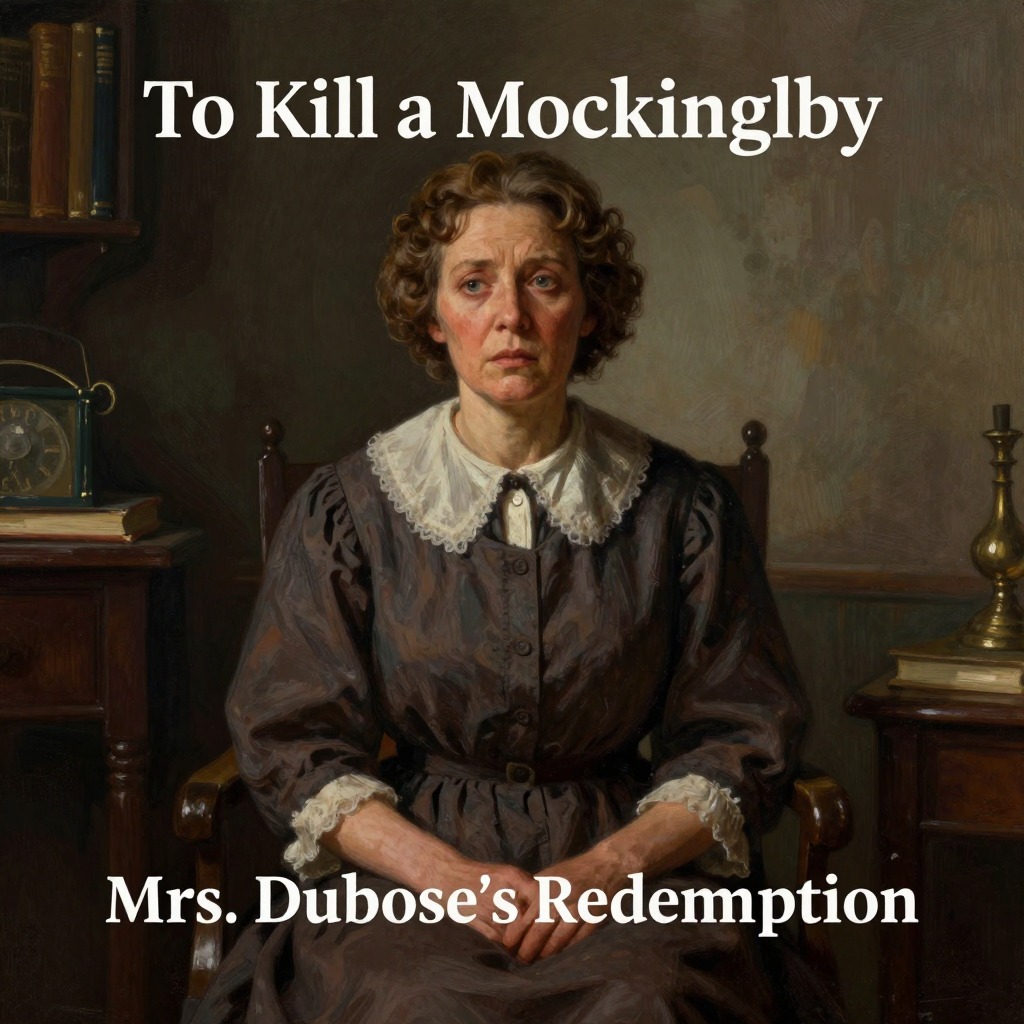
The most consequential medical judgment Dr. Reynolds makes concerns Mrs. Dubose. Atticus reveals to Jem that Mrs. Dubose was a morphine addict, that she had taken it as a pain-killer for years on the doctor's prescription, and that she "would have spent the rest of her life on it and died without so much agony, but she was too contrary." Dr. Reynolds had put her on morphine, and it was within his medical framework that she could have remained—yet she rejected that path. The doctor's role here is paradoxical: he is the source of the addiction (through his prescription) and also the witness to her withdrawal. His medical authority establishes what is "all right"—taking anything to make it easier when one is as sick as she was—and what Mrs. Dubose herself deemed unacceptable. Atticus uses this medical fact to redefine courage for Jem: not a man with a gun, but a woman who knows she is "licked before [she] begin[s] but [begins] anyway." Dr. Reynolds's diagnosis provides the clinical substrate for that moral lesson.
The Mad Dog and the Boundaries of Sickness
Dr. Reynolds does not appear at the mad dog incident, but his professional domain is implicitly invoked. When Calpurnia telephones Atticus to report that Tim Johnson is behaving strangely, she insists, "I know a mad dog when I see one," and the sheriff, Mr. Heck Tate, confirms the diagnosis by observing the dog's symptoms. The medical category of rabies—a disease that transforms a beloved pet into a lethal threat—is established without the doctor's physical presence, but his expertise hovers over the scene. The dog must be shot because it is, in medical terms, beyond cure; the community's safety depends on recognizing when a creature has crossed from health into a danger that only a bullet can stop. Dr. Reynolds's absence here underscores that his authority is not always needed in person; his diagnostic framework has been absorbed by the community.
The Doctor as a Figure of Practical Emergency
Dr. Reynolds is also the town's resource for first-aid instructions when he is away, a duty delegated to Eula May, the telephone operator. This detail places him within the fabric of Maycomb's daily life: he is not only a healer but a civic institution, someone whose absence requires a backup system. When he is present, he performs minor services—removing splinters, treating injuries—but the novel never shows him in a dramatic surgical or life-saving role. His significance is cumulative and contextual: he is the man who tells the truth about Mrs. Radley's death, who gives Mrs. Dubose the morphine that becomes her trial, and who certifies the time she has left. In a town where gossip and legend often obscure reality, Dr. Reynolds's quiet, factual pronouncements are the bedrock on which Atticus builds his lessons about facing death and addiction with clear eyes.
Narrative Role and Thematic Significance
Dr. Reynolds functions as a narrative instrument of medical realism in a story that otherwise traffics in Gothic mystery and moral allegory. He is the character who converts the Radley death from a horror story into a natural event, who transforms Mrs. Dubose's frightening fits from inexplicable seizures into a deliberate act of will, and who provides the temporal frame for her final battle. Without his diagnoses, the novel's central lessons about courage—that it is not a man with a gun but a woman fighting her own body's dependency—would lack their clinical foundation. He is never a protagonist, never a moral voice; he is the doctor who states the facts, and those facts become the raw material for Atticus's ethical instruction. In a world where the "Maycomb's usual disease" is a metaphor for racial prejudice, Dr. Reynolds treats actual diseases, and his clear-eyed professionalism stands in quiet contrast to the town's moral evasions.